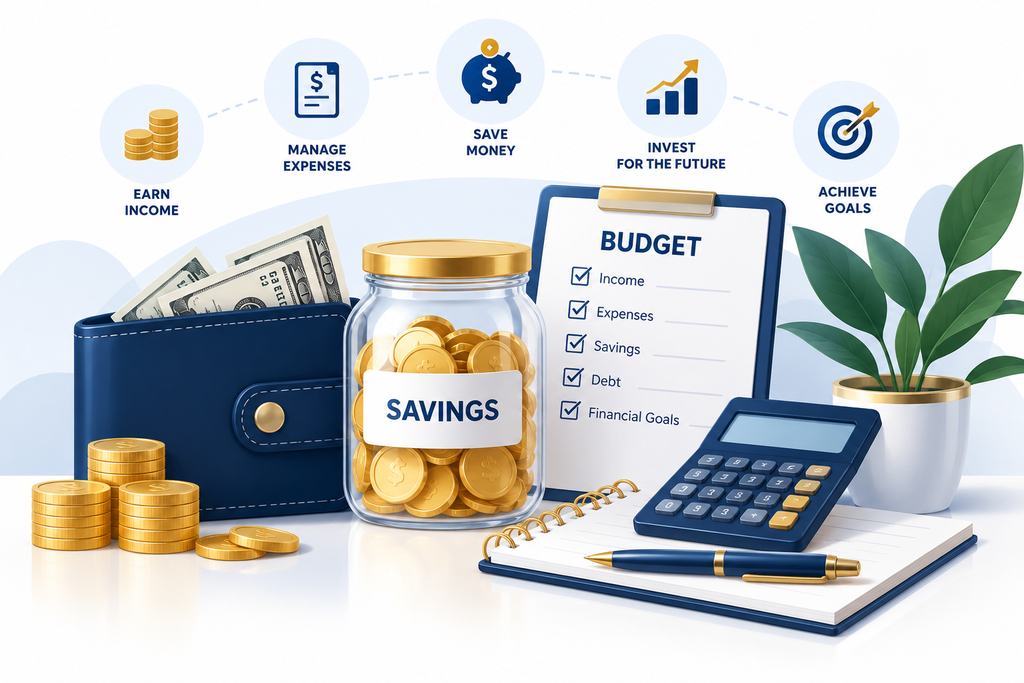
Personal finance is how you manage your money to meet your needs, achieve your goals, and prepare for the future. It includes earning money, budgeting, saving, investing, managing debt, and planning for major expenses.
In simple terms, personal finance is about making informed decisions about your money. Whether you want to pay your bills on time, build an emergency fund, buy a home, or prepare for retirement, managing your finances can help you make progress toward those goals.
What Does Personal Finance Include?
Personal finance covers several important areas:
- Budgeting: Planning how to spend your income on bills, everyday expenses, savings, and other priorities.
- Saving: Setting money aside for emergencies, planned purchases, and future needs.
- Managing debt: Keeping track of credit cards, student loans, personal loans, and other debts while working toward repayment.
- Investing: Putting money into assets such as stocks or bonds with the goal of growing wealth over time, while understanding the risks.
- Financial planning: Setting short-term and long-term goals, including buying a home or preparing for retirement.
These areas work together. For example, a budget can help you identify money to save, while managing debt can free up more of your income for future goals.
Why Is Personal Finance Important?
Understanding personal finance can help you make better decisions about your income and expenses. It can also help you prepare for unexpected costs instead of relying entirely on credit cards or loans.
Good money management does not require a high income. It starts with understanding how much money comes in, where it goes, and what you want to achieve with it.
For example, someone who saves a small amount consistently each month may gradually build an emergency fund. Someone else may prioritize paying down high-interest credit card debt before increasing other savings.
The right approach depends on your income, expenses, debts, responsibilities, and goals.
How Can You Improve Your Personal Finances?
Start with these four steps:
- Track your spending. Review your income, bills, and everyday purchases.
- Create a budget. Assign your money to essential expenses, personal spending, and financial goals.
- Build savings. Start with an achievable amount and work toward an emergency fund.
- Review your progress. Check your budget regularly and adjust it when your circumstances change.
If you are unsure where to begin, practical advice about personal finance should focus on your current situation rather than a one-size-fits-all formula.
What Is the First Step in Personal Finance?
The first step is understanding your financial situation. Calculate your monthly income, list your regular expenses, and identify any debts and savings. Once you know where you stand, you can decide which goal to tackle first.
The bottom line: Personal finance is the process of managing your money intentionally. You do not need to master everything at once. Start with a clear budget, build consistent habits, and make adjustments as your needs and goals evolve.