What is budgeting? Budgeting is the process of planning how you will spend and save your money over a specific period. It helps you understand how much money you earn, where your money goes, and how much you can set aside for future needs. Whether you have a regular salary, freelance income, or a household to manage, budgeting can help you make informed financial decisions.
You do not need a high income or complicated software to create a budget. A simple plan that tracks your income and expenses can help you manage your money more effectively.
What Is Budgeting and How Does It Work?
Budgeting involves estimating your income, identifying your expenses, and deciding how to allocate your available money. You then compare your actual spending with your plan and make adjustments when necessary.
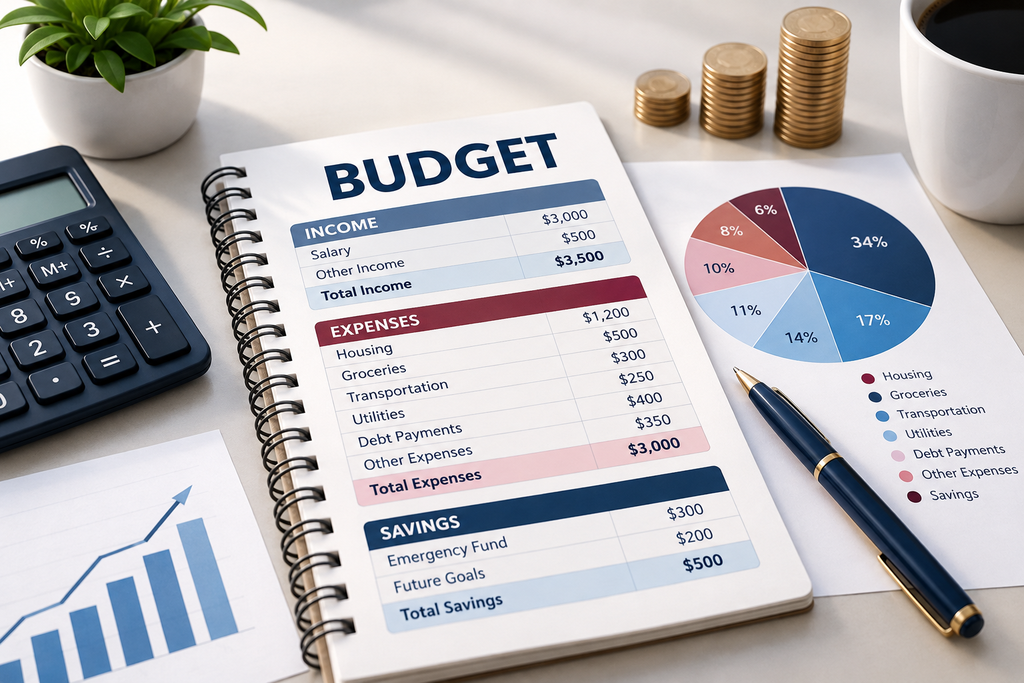
For example, imagine that your monthly take-home income is $3,000. You need to cover housing, groceries, utilities, transportation, debt payments, and other expenses. A budget helps you assign money to these categories while leaving room for savings and personal spending.
A basic budgeting process includes four steps:
- Calculate your income: Add up the money you expect to receive during the month after taxes and other deductions.
- List your expenses: Include essential bills, debt payments, groceries, transportation, subscriptions, and discretionary purchases.
- Allocate your money: Set spending limits for different categories and decide how much you can reasonably save.
- Review your spending: Compare your actual expenses with your budget each week or month and adjust your plan as needed.
Why Is Budgeting Important?
Budgeting helps you understand your financial habits and plan for upcoming expenses. It can also help you make better decisions about how to use your income.
Here are some important benefits of budgeting:
- Control spending: Identify unnecessary expenses and decide where you can reduce costs.
- Build savings: Set aside money for emergencies, future purchases, or longer-term goals.
- Prepare for bills: Plan for recurring payments instead of being surprised by due dates.
- Manage debt: Include loan and credit card payments in your monthly spending plan.
- Work toward financial goals: Track progress toward goals such as building an emergency fund or saving for a major purchase.
Budgeting does not mean eliminating everything you enjoy. Instead, it helps you balance your needs, wants, and financial priorities.
What Are the Different Types of Budgeting?
There is no single budgeting method that works for everyone. Your preferred approach may depend on your income, expenses, and financial goals.
Zero-based budgeting: Assign every dollar of your planned income to expenses, savings, or debt payments until no money remains unallocated.
The 50/30/20 budget: Use a general guideline of allocating 50% of after-tax income to needs, 30% to wants, and 20% to savings and debt repayment. You may need to adjust these percentages to suit your circumstances.
Envelope budgeting: Set a spending limit for each category and track how much money remains. You can use physical envelopes or a digital system.
Pay-yourself-first budgeting: Set aside money for savings before allocating the rest of your income to other expenses.
Each method offers a different way to organize your money. Choose one that you can maintain consistently.
How Can You Start Budgeting?
You can start budgeting with a notebook, spreadsheet, or budgeting app. Follow these practical steps:
- Record your monthly take-home income.
- Write down your fixed expenses, such as rent, insurance, and loan payments.
- Estimate variable expenses, including groceries, transportation, and entertainment.
- Decide how much to allocate to savings and financial goals.
- Track your actual spending and review your budget regularly.
If your expenses exceed your income, look for realistic adjustments. You might reduce discretionary spending, compare service costs, or review recurring subscriptions. If your income varies from month to month, use a conservative estimate and prioritize essential expenses.
For more help organizing your finances, read our guide to personal finance basics. You can also consult the U.S. government’s Consumer.gov guide to making a budget for additional guidance.
Is Budgeting Only for People With Limited Income?
No. Budgeting can help people at different income levels. Someone earning a high salary may use a budget to plan major purchases, build investments, or prepare for retirement. Someone with a limited income may use one to prioritize bills and manage essential expenses.
The purpose of budgeting is not simply to spend less. It is to make deliberate decisions about your available money and direct it toward what matters most to you.
Final Thoughts
Budgeting is a practical way to plan your spending, prepare for expenses, and work toward financial goals. Start by recording your income and expenses, choose a budgeting method that suits your needs, and review your progress regularly. Over time, a consistent budget can help you develop better money-management habits and make more confident financial decisions.